
What gets lost
when someone leaves?
The decisions nobody wrote down. The workarounds that became policy. The context that lived in one person's head for three years. Codex captures it.
12 min
avg capture time
94%
knowledge retained
3 days
faster onboarding
→ Step 1 of 3: Role context
This helps Codex index the knowledge by function — so the next person in this seat finds it immediately.
This form is the product. No signup required.
The knowledge-loss problem
The cost isn't the departure.
It's what leaves with them.
Marcus's last day. Three years of decisions. Zero documentation.
Your senior backend engineer is leaving. He knows why the auth service was rebuilt in 2022, why you never use that third-party SDK, and why the deployment pipeline has that one step nobody touches. In two weeks, that knowledge is gone. The next engineer will spend six months rediscovering it through broken deploys and confused Slack threads.
Heard from
Engineering Manager, 60-person startup
Capture it in a 12-minute interview. Find it in 30 seconds.
Codex runs a structured exit capture with Marcus — not an exit interview, a knowledge interview. Every decision, every workaround, every 'don't touch that' gets indexed by role, system, and date. The next engineer finds it in their onboarding queue.
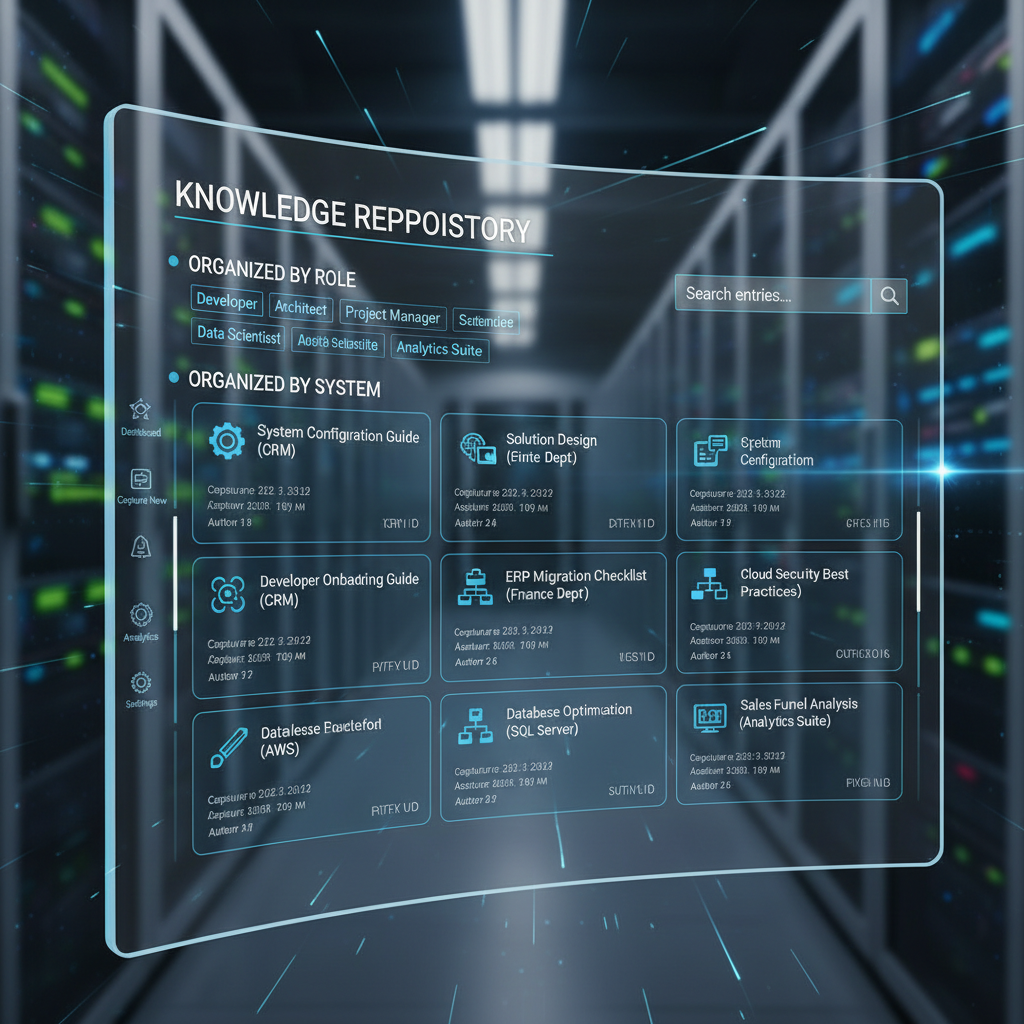
47
Entries captured
12 min
Capture time
3 days
Onboarding saved
The reorg erased the why. Now nobody remembers.
Six months after the restructure, your new team lead asks: 'Why does this process exist?' Nobody knows. The three people who designed it are in different departments. The Confluence page has seventeen edits and no rationale. The decision that made sense in Q3 2024 now looks like bureaucratic archaeology — and changing it means risking something nobody can name.
Heard from
People Ops Lead, 120-person SaaS company
Every process has a timestamp and an author. Every decision has a 'because.'
Codex attaches context to process, not just documentation. When you change something, you capture why the old version existed before you replace it. Future you — or future someone — will thank current you.
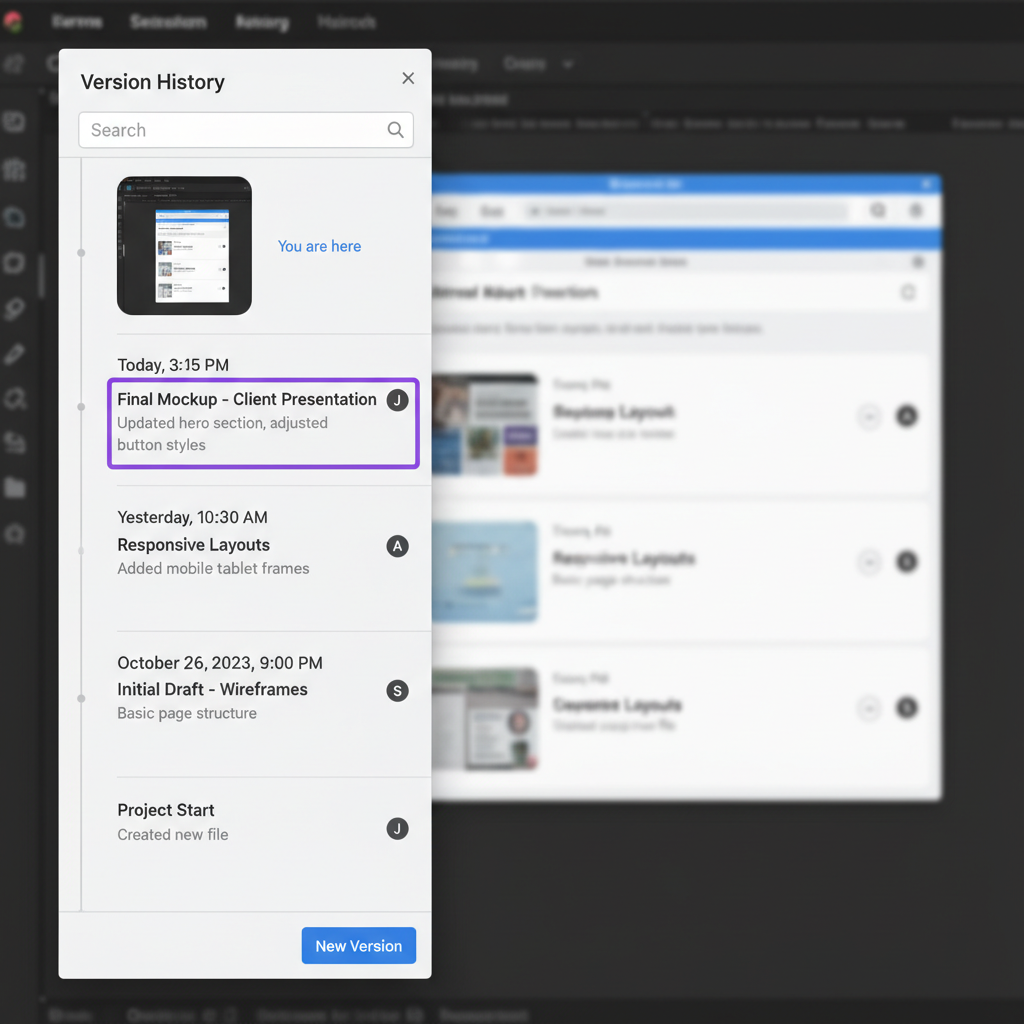
Why we split the on-call rotation
The SDK we chose not to use (and why)
Deployment freeze — original rationale
Their tenth 'who do I ask about this?' Slack message. This week.
Your new hire is three weeks in. Brilliant. Motivated. Asking the same questions your last three new hires asked. The answers exist somewhere — in someone's head, in a Slack thread from 2022, in a doc that was accurate eighteen months ago. They're not failing to find answers. You're failing to put answers where they can find them.
Heard from
Founder, scaling past 50 employees
Onboarding that answers questions before they're asked.
Codex builds a role-specific knowledge queue for every new hire. On day one, they get the tribal knowledge for their seat — not a generic handbook. The questions they'd ask in week three are answered in week one. Your senior people stop being a help desk.
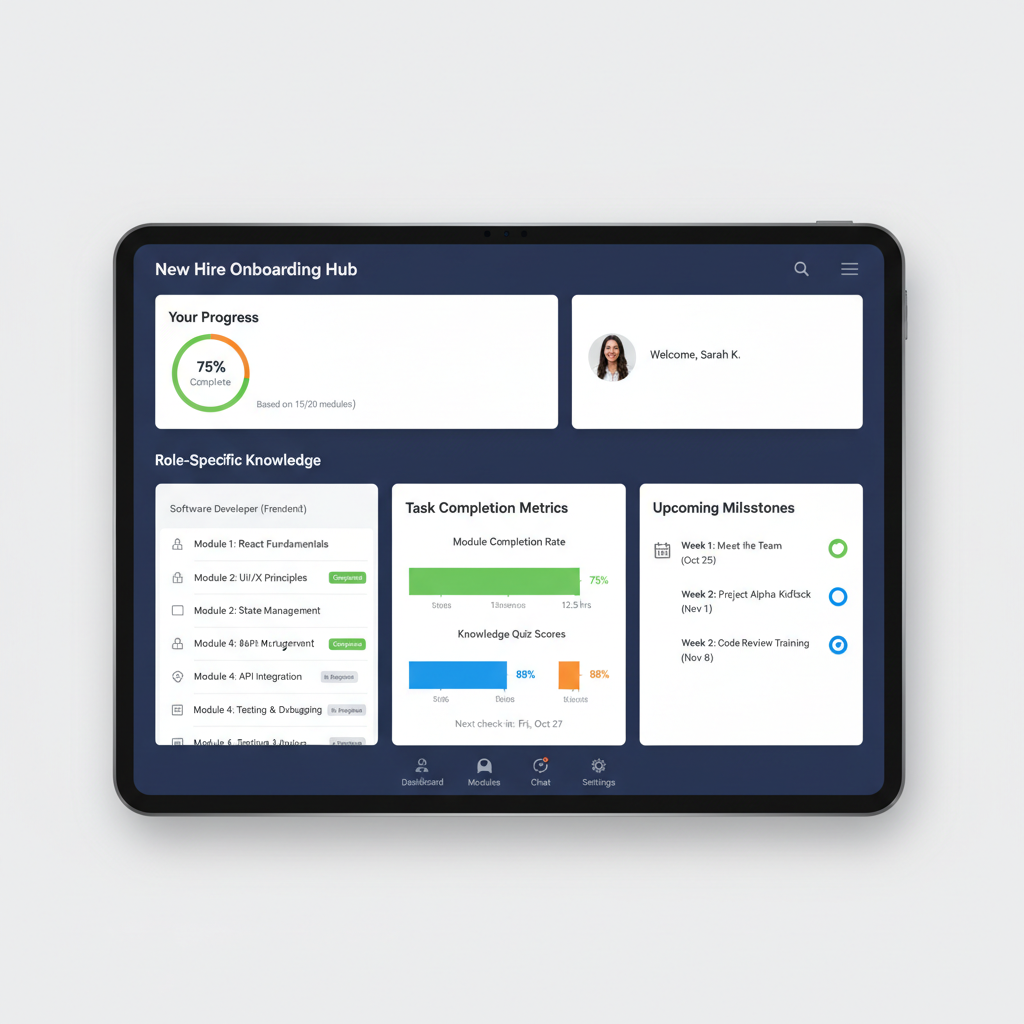
23
Avg questions/week (before)
4
Avg questions/week (after)
6 hrs/wk
Senior time reclaimed
The people building it
We eat our own cooking.
Here's what only we know.
Every team member has a Codex entry. These are real entries from our team — the kind of thing that would have walked out the door if we didn't write it down.

Priya Nair
Head of Product
3 years at Codex
Why we don't have a free tier
We tried it in 2024. Conversion was 0.3%. More importantly, free-tier users had no skin in the game and never completed a capture. The product only works when someone actually sits down and thinks. Friction is the feature.
“I want to work somewhere that treats knowledge like infrastructure.”

James Okafor
Lead Engineer
2 years at Codex
The search index rebuild we never talk about
In November 2024 we rebuilt the entire search layer in a weekend. The old system couldn't handle entries longer than 800 tokens without degrading. We never announced it because we didn't want users to think we'd been shipping a broken search for six months. We had been.
“The codebase has a memory. So should the team.”

Sofia Reyes
Content & Ops
18 months at Codex
The onboarding email that actually works
We A/B tested 11 variations. The winner had exactly 94 words, no bullet points, and ended with a question. The question was: 'What's the one thing your last company never wrote down?' Response rate: 34%. Everything else was under 6%. Nobody knows why. We stopped trying to understand it and just kept using it.
“Good documentation is just good thinking, written down.”
Every new hire at Codex adds an entry in their first week.
Open positions
Build this
with us.
We're a small team solving a problem that compounds with every hire, every departure, and every reorg. If you want to work somewhere that thinks about knowledge the way engineers think about infrastructure — we're looking for you.
Senior Full-Stack Engineer
You'll own the capture pipeline — the core product experience where knowledge goes from someone's head to a searchable, structured entry. Think deeply about information architecture, not just data modeling.
Product Designer
The hardest design problem we have: making knowledge capture feel like a conversation, not a form. You'll work on the core flows that determine whether someone actually completes a capture or closes the tab.
Content Strategist
You'll build the knowledge taxonomy that makes Codex actually useful — the tagging system, the entry templates, the search vocabulary. You understand that how you label something determines whether anyone finds it.
ML / AI Engineer
We use LLMs to structure and tag knowledge entries, but we're not precious about which models or approaches. You'll run experiments, measure quality, and build the pipeline that turns raw captures into searchable structured knowledge.
The offer
We're a small team.
You'll feel it immediately.
No six-month roadmap handed to you. No feature factory. The work you do this month will be in front of customers next month. Your Codex entry on day one is the first thing the next hire reads.
No cover letter required.
We'll ask you one Codex question instead.